


年
2018
サイズ
80.00*80.00 cm
メディア
壓克力, 雕塑, 複合媒材
フレーム
フレームなし
証明書
証明書なし
NT $50,000
20 views0 saved to collection
説明
You can always use (X, Y, Z) to define the position of a point.
In three-dimensional space, three coordinate axes are given, each perpendicular to the other two at the origin, the point at which they cross. They are usually labeled (X, Y, Z), and we can use them to present all the points in our world. However, which spot is mine? And how about you? We need to find out the spot that fits us and makes us shine.
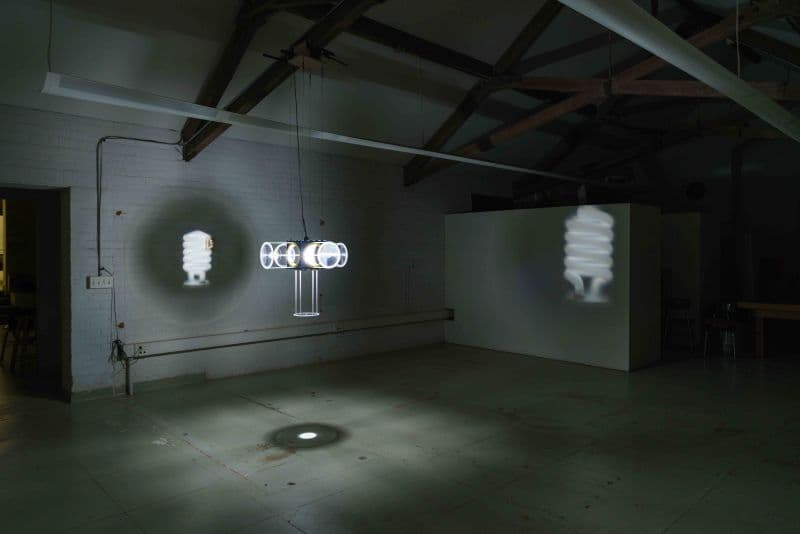
A space of light is created by a lens. When the light goes through a lens, it builds a layer of focus, which is usually called “depth of field” in photography. The space of light, when exactly aligned with the specific space, can make the projection clear on the walls. Once you move the lamp, it is no longer focused, and you only can see brightness but not the image of the light bulb itself. The (X, Y, Z) lamp can only reveal itself when it’s in the right room and the right position. Otherwise, it is just a normal lamp.
Spiral fluorescent bulbs are very common in our daily life. They are something that we usually neglect when off and can barely see with bare eyes when on. The projection itself creates a new way to see it in an upside-down orientation and with a special blurred edge effect caused by the Fresnel lens.
Lighting can not only provide brightness but also display itself. This lamp can still work in another room, but it is not complete. Find the right spot and people will see you.
artworkDetail.noPhoto
アーティスト紹介
作品以光影裝置為主,透過發現日常生活容易被忽視的現象,延伸出意想不到的結果,並以建築學背景讓光影與空間產生互動,光不只是光,更是千變萬化的模樣